


If you own a pool in Queensland or Northern NSW, you already know the morning routine — walk outside, grab the scoop, fish out the cane toads. It's frustrating, it can become a daily routine, and it's a real risk to any dog with access to the pool area.
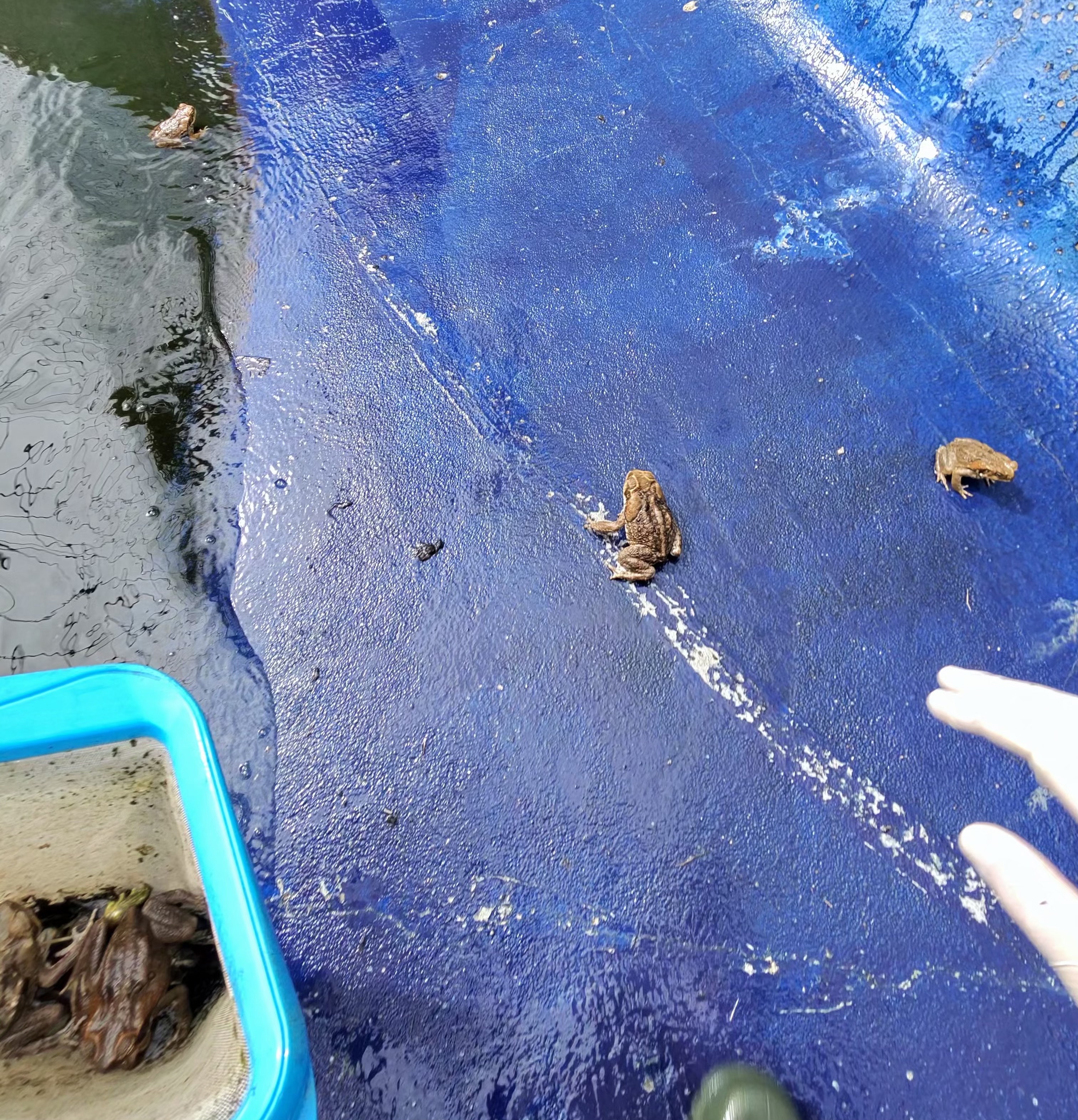
The morning scoop — a real customer pool where adult cane toads were collected straight off the water surface. Once a pool is no longer being properly maintained, this is the routine that takes over.
This guide covers what tends to work, what doesn't, and the order to do things in. Skip to the section that matches where you're at.
Why Pools Are a Magnet for Cane Toads
Three things pull cane toads toward your pool:
- Water — toads need to rehydrate constantly through their skin, and an unfenced pool can be the largest, most reliable water source in the yard.
- Insects — pool lights at night attract moths, beetles and other prey. Where the food goes, the toads follow.
- Smooth walls — once a toad falls in, it can struggle to climb back out. They drown, the toxin can release into the water, and you've now got a contamination problem on top of a body to scoop.
In peak season, some pool owners report collecting multiple toads in a single night after rain, especially in areas close to bushland, drains, creeks or breeding sites.
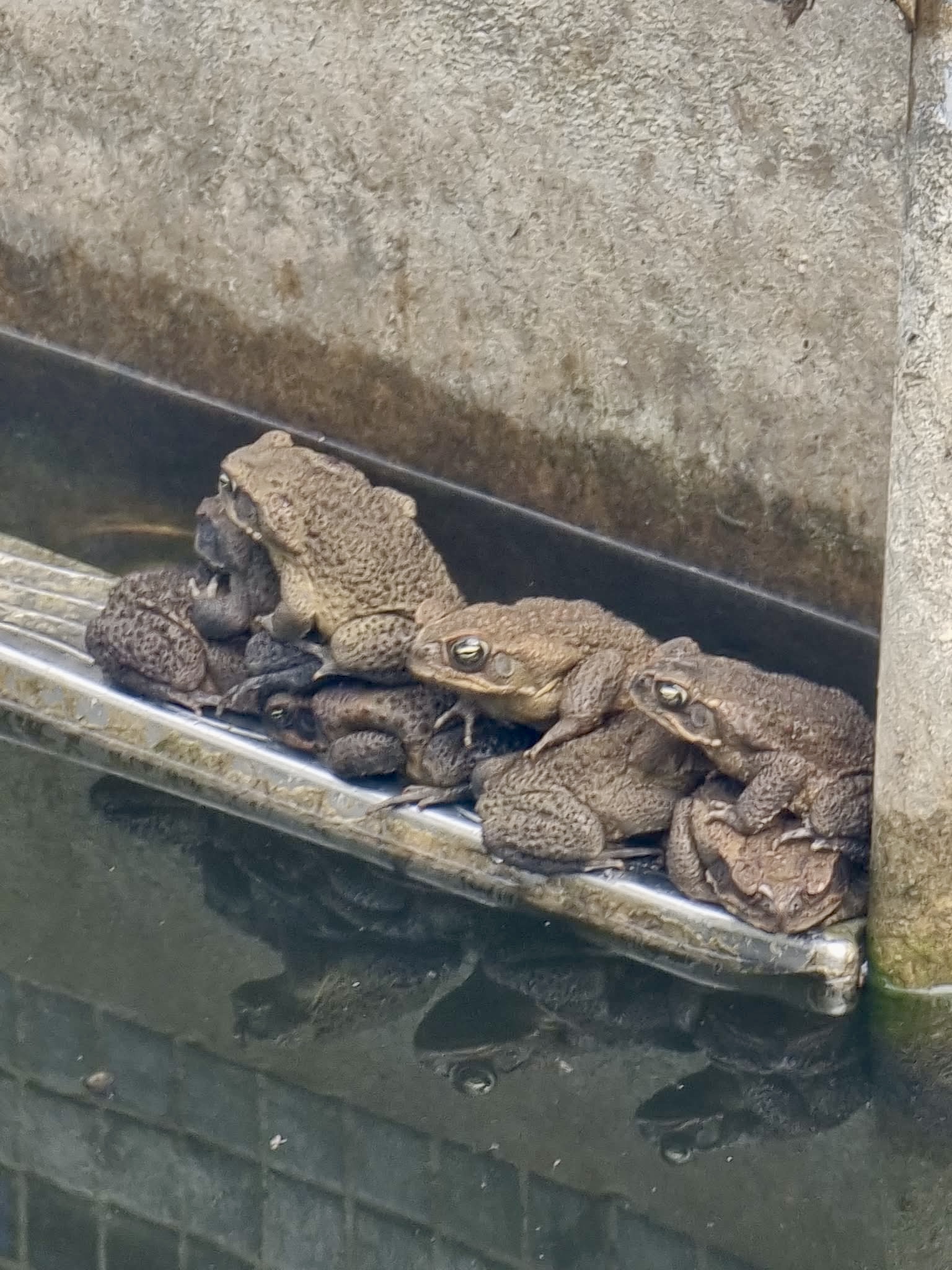
A real customer pool that hadn't been maintained — once a pool stops being regularly cleaned, filtered and chlorinated, it can quickly turn into a cane toad frenzy like this. Six adult toads stacked on the skimmer edge after a single humid night.
The Risk to Your Dog
A dead cane toad in a pool isn't just unpleasant — it can be actively dangerous to pets.
Bufotoxin can leach into the water. The white milky secretion from the toad's parotoid glands can dissolve into the pool, especially if a body sits there for hours. A dog drinking from a contaminated pool may absorb enough toxin to show symptoms — drooling, red gums, disorientation, and in severe cases, seizures.
Dogs investigate floating toads. Even a dog that knows better will often sniff or paw at a body floating near the coping. One lick can be enough.
Chlorine helps, but slowly. Normal pool filtration and chlorination may help reduce contamination over time, but they should not be treated as an instant fix. Treat any pool with a drowned toad as potentially contaminated until you've taken advice from your pool professional.
If your dog has mouthed, licked or been exposed to a cane toad and is showing symptoms, contact an emergency veterinarian immediately. Basic first-aid steps may help while you are travelling, but they are not a substitute for veterinary care. Our cane toad first-aid guide walks through the steps you can take on the way.
Quick Wins You Can Do Tonight
Before we get to longer-term solutions, here are the things that tend to move the needle this week:
1. Turn off your pool lights at night, or switch to yellow LEDs.
Bright white pool lighting attracts insects, which in turn attracts toads. Yellow or amber lights are far less attractive to night-flying bugs. This single change can help cut your overnight toad count noticeably.
2. Reduce surrounding water sources.
Pet water bowls, leaking taps, blocked drains, and overwatered garden beds all give toads a reason to stop in your yard on the way to the pool. Empty bowls overnight. Fix drips. Aim sprinklers away from the pool surround.
3. Sweep the pool surround at dusk.
Toads often gather under pool umbrellas, planter boxes, and the warm coping after sunset. A quick sweep at dusk with a torch and bucket — wearing gloves — can remove the population that would otherwise fall in overnight. (Please dispatch humanely. See the Queensland guidelines for humane euthanasia.)
4. Clear the perimeter.
Mulch piles, dense shrubs and stacked debris against the pool fence give toads daytime shelter. Pull these back from the first metre around the pool fence and you remove their hiding spots.
These four steps can meaningfully reduce your nightly toad count, but they won't stop the problem at the source.
The Longer-Term Approach: A Toad-Proof Pool Barrier
Standard Queensland pool fencing meets the council safety regs for keeping children out of the pool — but it isn't designed to stop cane toads. They can squeeze through the vertical bars without slowing down.
A Toad Proof Barrier is fine mesh fitted directly onto your existing pool fence at ground level — there's no new fence built, the mesh simply attaches to the fence you already have. It's designed to close the gap at the base where toads currently squeeze through, with the mesh angled outward so toads find it difficult to grip and climb. When installed correctly, it is designed to dramatically reduce cane toad access to the pool area.
What we install:
- Galvanised fine mesh rated for outdoor Queensland conditions.
- Angled top lip that makes the barrier difficult for toads to climb.
- Sealed gate base so the entry gate doesn't become the weak point.
- Designed to be council-compliant — the barrier sits below the pool fence and is built to work alongside the existing safety certification rather than interfere with it.
Most pool installations take around half a day. The barrier is designed to remain visually discreet from most pool areas, and is built for long-term outdoor use in Queensland conditions.
We regularly help pool owners across the Gold Coast, Brisbane and Northern NSW reduce cane toad access around pool areas, pet zones and backyards.
If you want an indicative number for your yard, our Toad Proof Barrier Quote Tool gives you an estimate in about 60 seconds.
What About Pool Covers?
A solid pool cover can stop toads from falling in — but it has trade-offs. It only works when it's actually on (most pool owners take theirs off in summer when toad pressure is highest), and a soft cover can become a hazard, with toads getting on top and being unable to escape.
Mesh safety covers tend to be better for toad exclusion than solid covers, but the strongest result usually comes from combining a mesh cover with a perimeter barrier. The cover handles direct falls; the barrier is designed to stop the toad reaching the pool in the first place.
What If You've Already Got a Breeding Population?
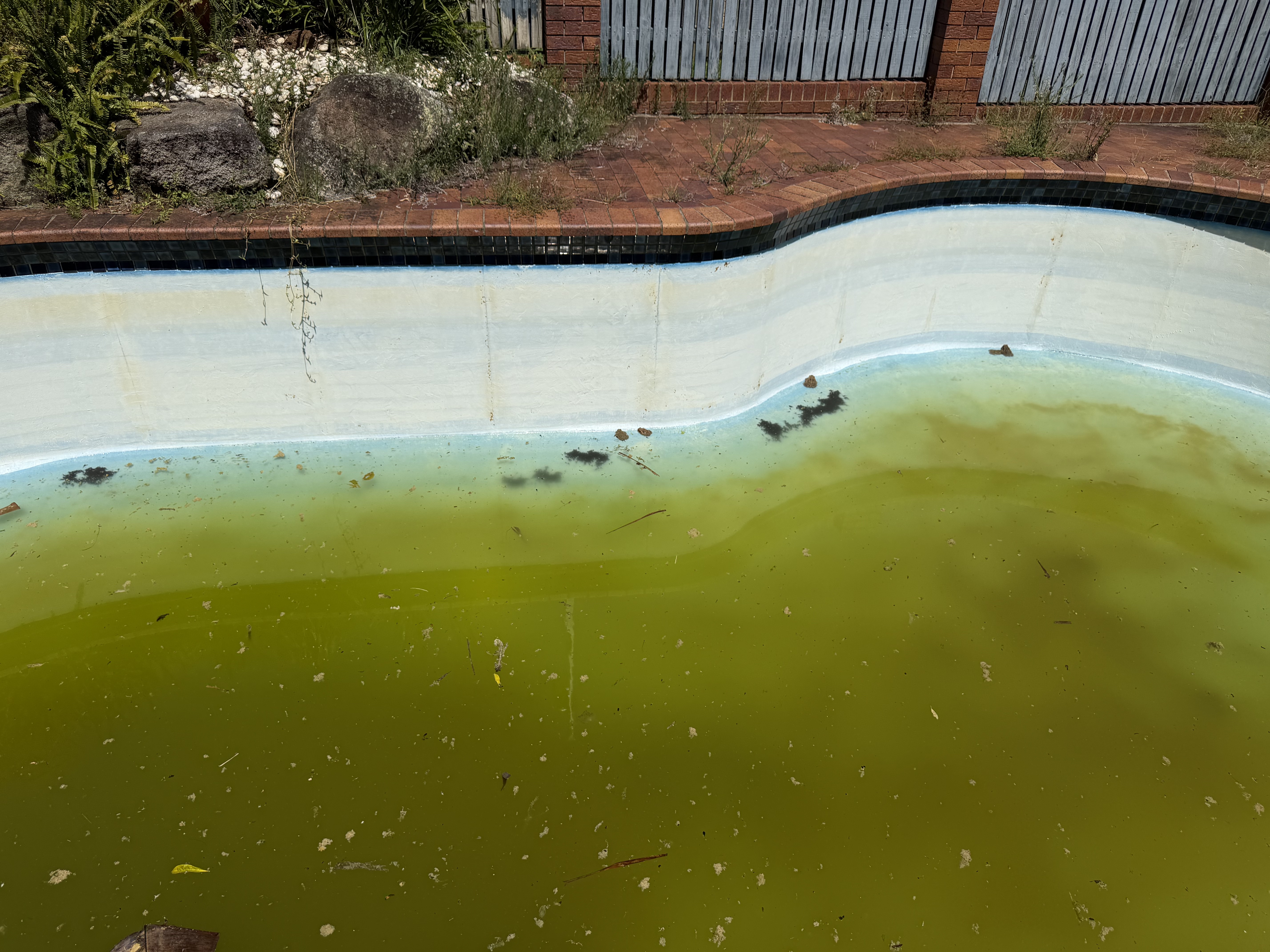
This is what an unmaintained pool can become — once chlorination and filtration stop, the water turns into a green algae bloom and the pool becomes an active breeding habitat for cane toads. We've seen pools in this condition produce tens of thousands of toadlets in a single wet season.
If you're scooping more than a handful of toads a night, there is very likely a breeding source nearby — often a pond, dam, drain or neglected water feature within a few hundred metres of your property.
A barrier helps stop new toads getting in. To actually reduce the local population over time, the breeding cycle also needs attention:
- Tadpole trapping in nearby ponds and dams using Watergum Tadpole Traps can remove large numbers of future toads before they leave the water.
- Adult removal on a scheduled basis during peak season helps keep the breeding-age population down.
- Education for neighbours — a single untreated pond next door can re-seed the suburb every wet season.
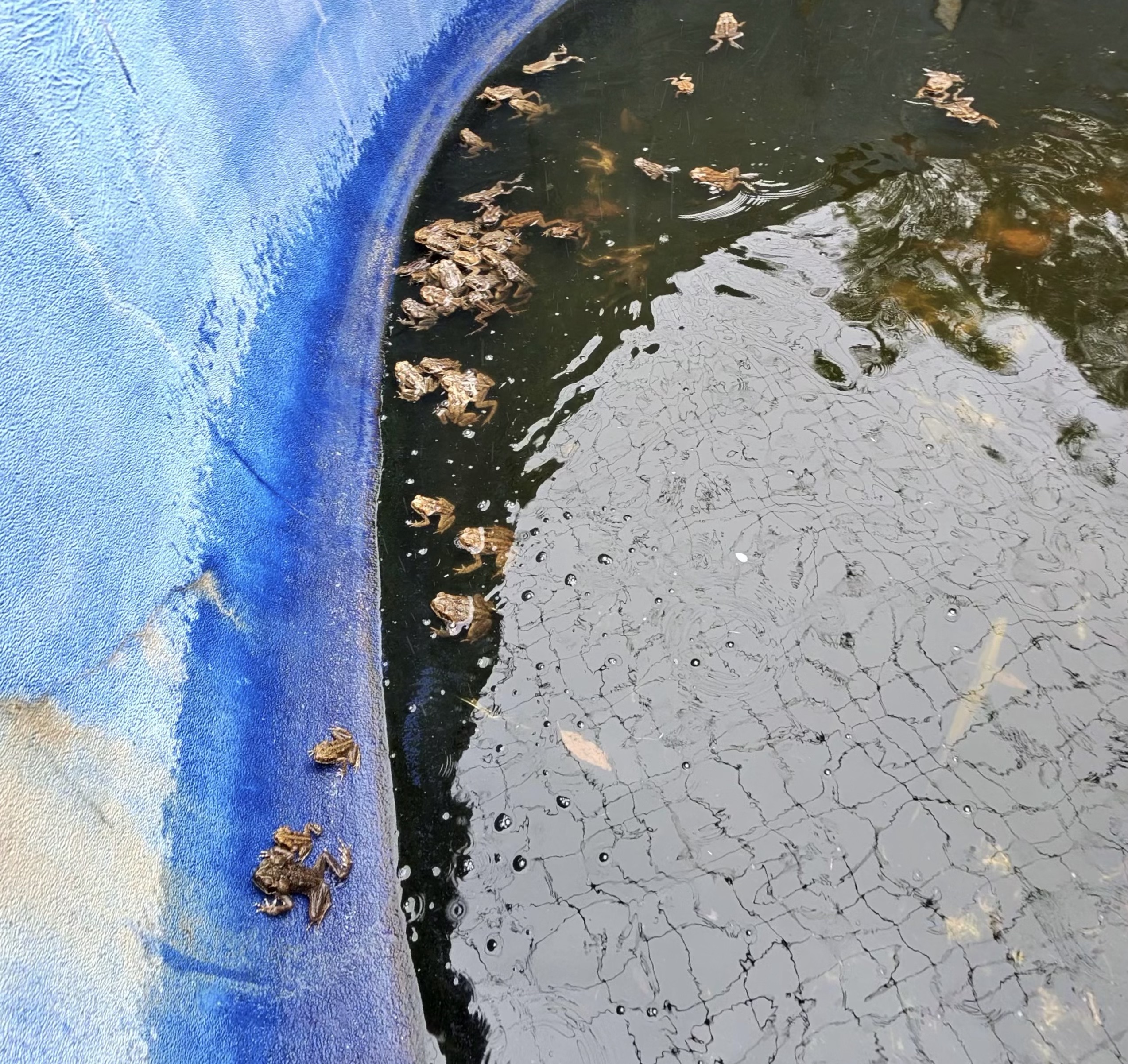
A real customer pool that had become an active breeding event — hundreds of newly emerged toadlets crowding the waterline along with several adults. This is what one untreated wet season inside a neglected pool can produce.
We run scheduled removal across Queensland and Northern NSW. The combination of barrier protection and scheduled removal can significantly reduce cane toad pressure over time, especially when nearby breeding sites are also managed.
A Note on Welfare
Cane toads are a declared pest in Queensland and removal is encouraged — but humane handling still matters. Don't relocate them, don't release them, and don't use methods that cause prolonged suffering. The Queensland Government's official humane euthanasia guidance is straightforward and effective.
If toad handling isn't something you want to deal with, that's exactly what our scheduled removal service is for.
In Summary
For an unprotected Queensland pool in toad country, the order of operations is:
- Tonight — change the lights, empty the water bowls, do a dusk sweep.
- This month — look at installing a Toad Proof Barrier around the pool fence.
- This season — consider scheduled removal and tadpole trapping if you have a local breeding source.
Done in that order, most properties can move from a nightly scoop-and-dispose routine to a far more manageable situation.
If you'd like a quick indicative estimate for a pool-area barrier, use the Quote Tool. If you'd rather chat it through, request a quote — we'll come out, look at your pool, and provide a tailored proposal.


